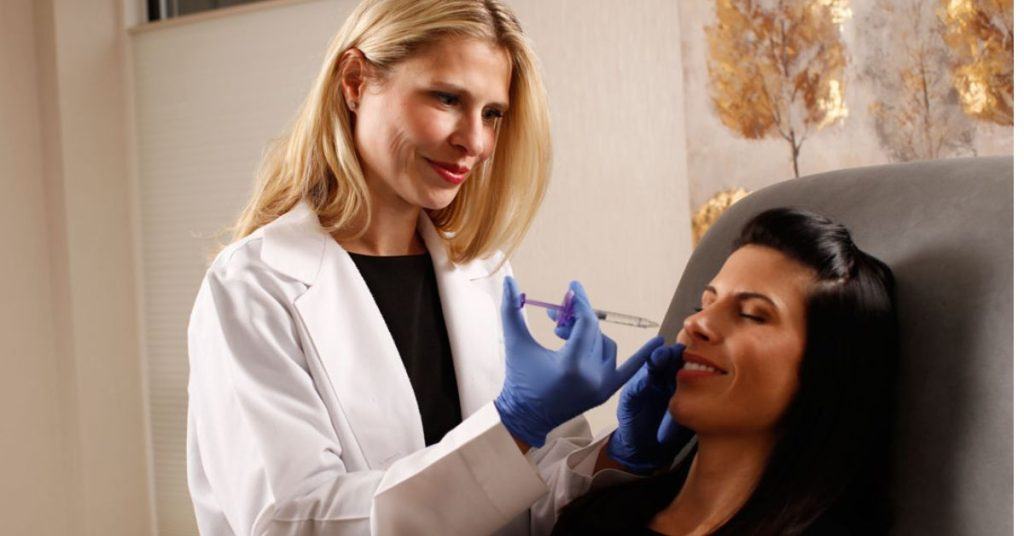
There is a fine line between different injectables…get it? The most well-known options are BOTOX® Cosmetic and dermal fillers, but several other injectables are used to smooth wrinkles. Our Rochester, NY, dermatology professionals provide a brief breakdown in this blog post so you can educate yourself and be ready to ask our team the questions that are most important to you.
What is BOTOX?
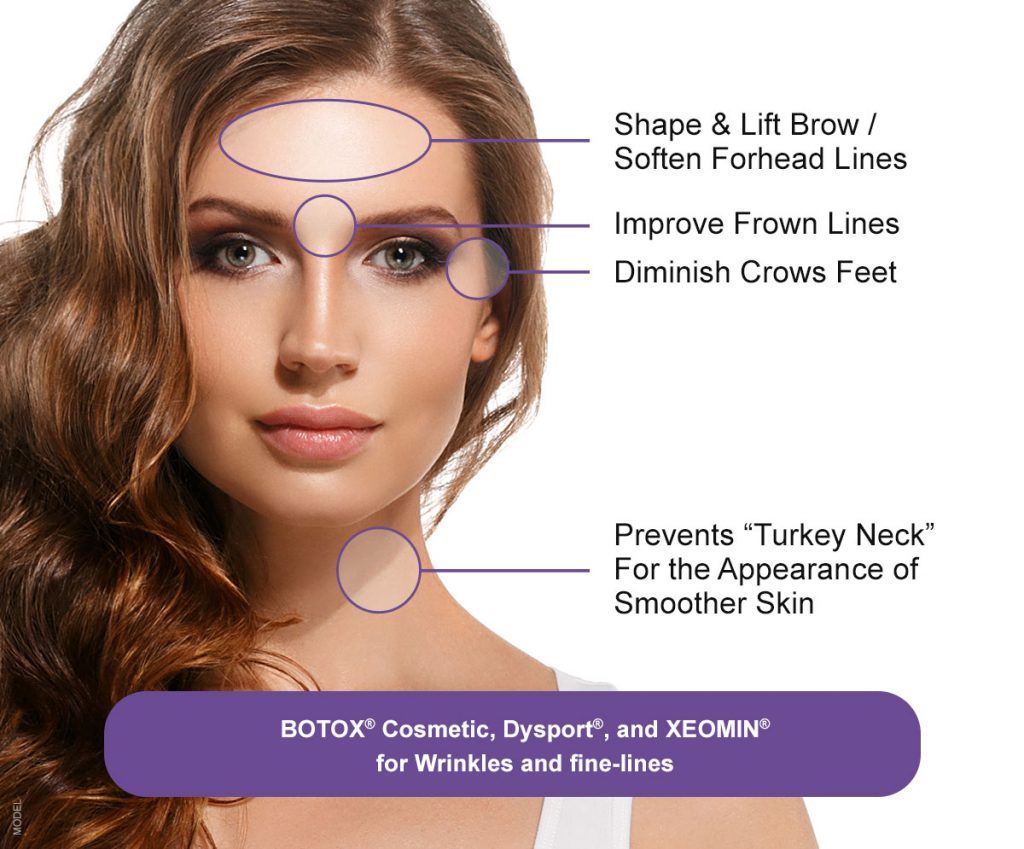
Even though BOTOX is a household name, many people considering wrinkle treatments aren’t sure how it works or how it differs from fillers. BOTOX and similar injectables, such as Dysport® and Xeomin®, soften wrinkles and fine lines by temporarily blocking the nerve signals that cause muscles used to squint, frown, smile, or make other expressions to contract.
What is a dermal filler?
Dermal fillers, on the other hand, add immediate volume in specific areas to smooth, lift, and enhance facial contours. When combined with BOTOX injections, the treatment is sometimes called a liquid facelift because it results in a more youthful appearance with no anesthesia or downtime.JUVÉDERM® products, Restylane® products, Revance® TEOXANE RHA, and BELOTERO BALANCE® are made from a substance called hyaluronic acid, which naturally exists in the skin. When injected into the skin, hyaluronic acid binds with water molecules and, in essence, “fills in” wrinkles and folds, corrects volume loss, and enhances contours.
What are biostimulators?
Not all fillers contain hyaluronic acid. Biostimulators such as Sculptra® and Radiesse® gradually restore volume by stimulating the production of new collagen. Sculptra is formulated using poly-L-lactic acid (PLLA). As the PLLA microparticles are absorbed, the skin responds by producing new collagen. Radiesse uses calcium hydroxylapatite (CaHA) microspheres, which are injected deeper into the skin to stimulate collagen production.
Common areas treated with dermal filler
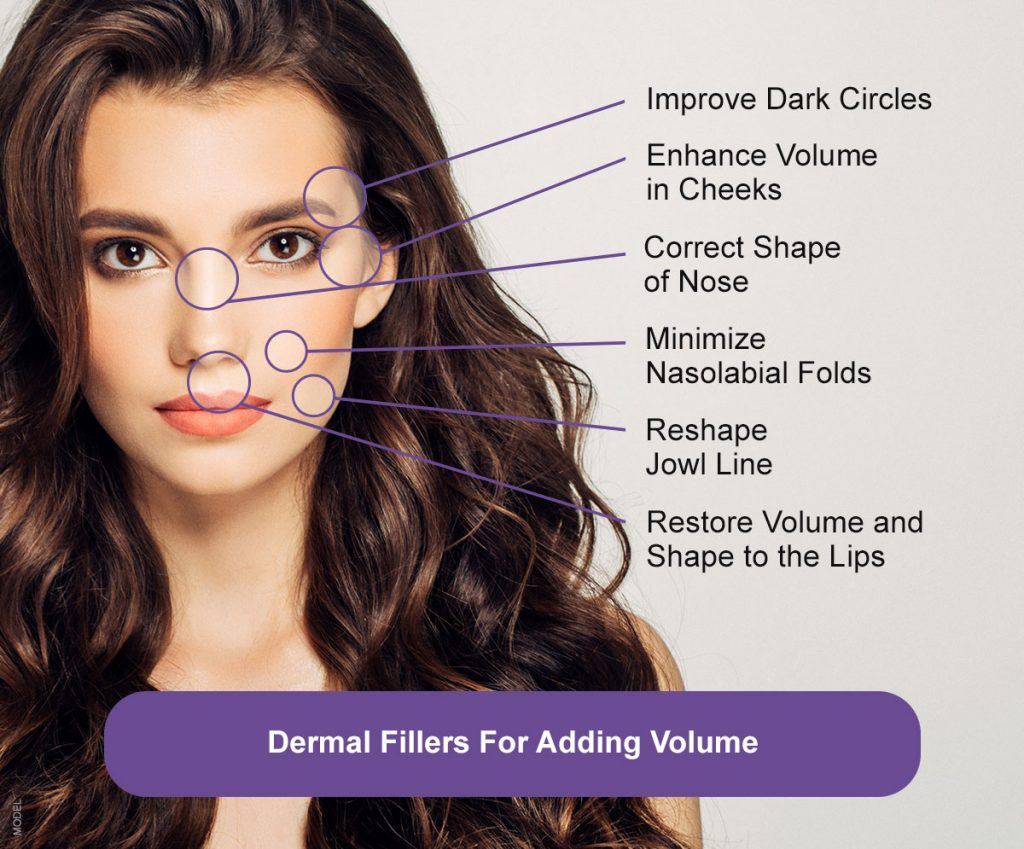
Fillers are extremely versatile, and can even be used on areas like the buttocks (see Sculptra) and the hands. But they are most commonly used to treat:
- Cheeks
- Chin
- Lips
- Nose
- Pre-jowl area
- Under eyes
Dermal fillers are so effective at smoothing and enhancing facial contours they earn a 93% Worth It rating on RealSelf.
Common areas treated with BOTOX
BOTOX and other neuromodulators are the most popular nonsurgical aesthetic treatments for a reason — they work! We commonly use BOTOX and its “cousins” on:
- Vertical lines between the eyes
- Droopy brows
- Crow’s feet around the eyes
- Horizontal forehead lines
- Bunny lines
We also use BOTOX to treat vertical lip lines, neck bands, and a dimpled chin. Read more about 4 of the best areas to use BOTOX.
What wrinkle-reduction treatment is best for me?
Well, it’s not always a choice of one or the other – most of our patients use a combination of both treatments to achieve optimal results. Dermal fillers are often used in conjunction with other skin rejuvenation treatments, including injections, chemical peels, microdermabrasion, or Fraxel® skin resurfacing.
Talk to our team about your goals, the areas you’re looking to improve, any past treatments, and we’ll provide a realistic recommendation for you. Request a consultation online or call Dermatology Associates of Rochester at (585) 272-0700 to schedule your visit!
This blog post was originally published in April 2023 and updated in June 2026.
Leave a Reply